Most dog walk checklists are the same undifferentiated list of twenty items, which is useless — you do not need the same kit for a ten-minute block loop as for a three-hour trail. This one is sorted by how long you are actually going out for.
The five essentials (every walk, no exceptions)
If you carry nothing else, carry these.
- A leash you trust. Check the clip. Leash hardware fails at the clip, almost always, and almost always after a period of getting stiff and stickier to open. If yours is showing that, replace it now rather than after the incident.
- ID on the collar. Microchips are excellent and require someone to catch your dog and take it to a vet or shelter first. A physical tag gets your dog home from a neighbour in twenty minutes.
- Waste bags — more than one. Two is the minimum. Dogs go twice more often than people plan for, and the second time is invariably the walk you brought exactly one bag.
- A way to carry the used bag. Genuinely a core item, not a luxury. Otherwise you spend the rest of the walk one-handed, which means no phone, no treats, no real leash control.
- Your phone. Not for scrolling — for the vet's number, a torch, and a photo of your dog if you ever have to show someone what you are looking for.
Solving number four properly: the Poop Bag Clip holds a tied-off bag on the leash so both your hands stay free.
Walks over 30 minutes: add water
Thirty minutes is roughly the line where water stops being optional, and it moves a lot earlier in heat — over about 24°C, take water on any walk at all.
Dogs cool themselves by panting, which means they lose water much faster than we do while showing far fewer obvious signs. By the time a dog is visibly struggling, it has been dehydrated for a while.
The sensible option is an all-in-one bottle with a fold-out bowl built into the cap. Best for street and park walks — one item, one hand, nothing to assemble. The 2-in-1 Portable Dog Water Bottle unfolds a real bowl in seconds, so your dog gets a proper drink instead of a few sips from a cupped hand.
Evening and early-morning walks: add light
From autumn onward most weekday walks happen in the dark at one end or the other. The rule is that reflective strips are a supplement and an active light is the actual safety item — reflective material only works when a headlight is aimed at it, which is exactly not the case at junctions and turns.
A rechargeable LED collar puts a light source on the dog that works from any angle and does not depend on anyone else's headlights. Charge it weekly on a fixed day; the usual failure mode is a flat light nobody noticed.
For your side of the leash, an LED flashlight leash puts a light ring on the lead and a torch in the handle, so you can see the path — and what your dog is sniffing — without juggling your phone.
Strong pullers and busy streets: add a wrist strap
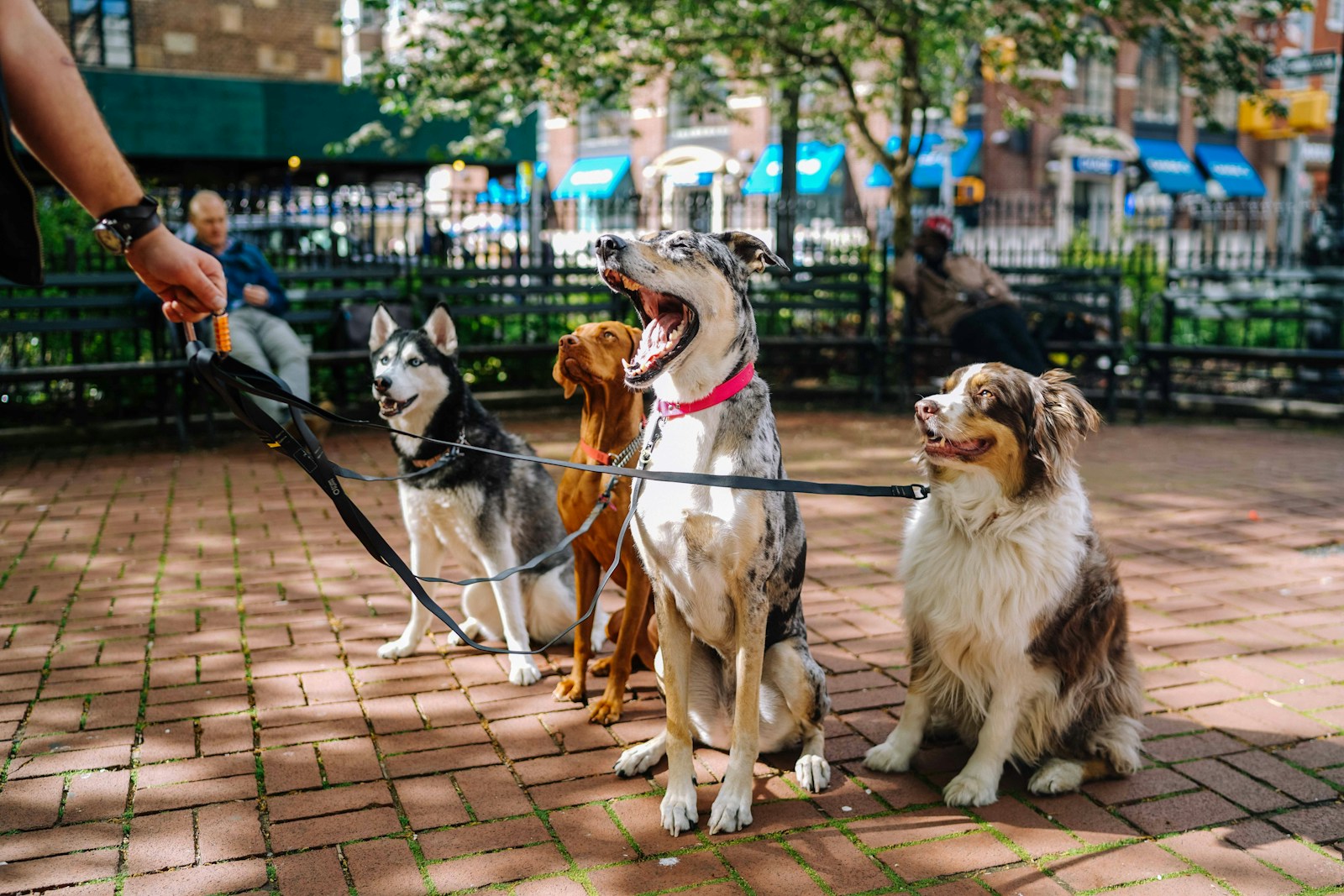
If your dog lunges at cats, bikes or other dogs, the weak link on the walk is not the leash — it is your grip on it. Handles get yanked loose at exactly the moment you least want a loose dog: next to a road. An anti-drop wrist strap clips the leash handle to your wrist, so a lunge you were not braced for costs you a step instead of your dog. It weighs next to nothing, so it can just live on the leash.
Long walks and hikes (90+ minutes)
- More water than you think. Plan for roughly 30ml per kilogram of dog per hour in warm weather, more for a working breed.
- Food. Either the sealed compartment on a 2-in-1 bottle or a small pouch of kibble. A dog that has burned through its energy two hours from the car is a serious problem.
- A basic first aid kit: vet wrap, gauze, tweezers for thorns and ticks, and a tick remover. Paw injuries are by far the most common trail issue.
- Paw protection or at least a paw check. Hot tarmac in summer and grit salt in winter both do real damage.
- A spare leash or a length of cord. Redundancy for the one failure that actually strands you.
Weather-specific additions
Hot weather
Walk early or late; do the seven-second test on tarmac with the back of your hand before setting out. Carry more water than feels necessary and offer it every fifteen to twenty minutes rather than waiting for the dog to ask.
Cold weather
Short-coated and small dogs lose heat fast. Dogs still dehydrate in the cold — they just do not look like it, so water gets skipped. Rinse salt off paws when you get home.
Rain
Check that whatever electronics you have on the collar are actually waterproof rather than "water resistant". Collar lights and leash lights are the items that quietly die over a wet winter, so dry them off when you get in.
What you can leave at home
For an ordinary walk, most of the things sold as walk essentials are not:
- A full first aid kit on a twenty-minute street walk. You are minutes from home.
- Multiple toys. One, if you are going somewhere they will actually be used.
- A second leash for anything short of a hike.
- Bulky treat pouches — a handful in a pocket does the job unless you are running a training session.
The failure mode with dog gear is not owning too little. It is owning so much that you stop taking any of it, and end up walking out with a leash and one bag because assembling the kit became a chore. Keep the everyday set small enough that it lives by the door and goes with you automatically.
The by-the-door test
Everything on the essentials list should live in one place near the door and require zero decisions. Bags in your pocket, light on the collar, bottle filled and ready. If getting out of the house takes more than about fifteen seconds of preparation, the gear will gradually stop coming with you — and gear you leave at home protects nobody.


 Welcome To The Pack